
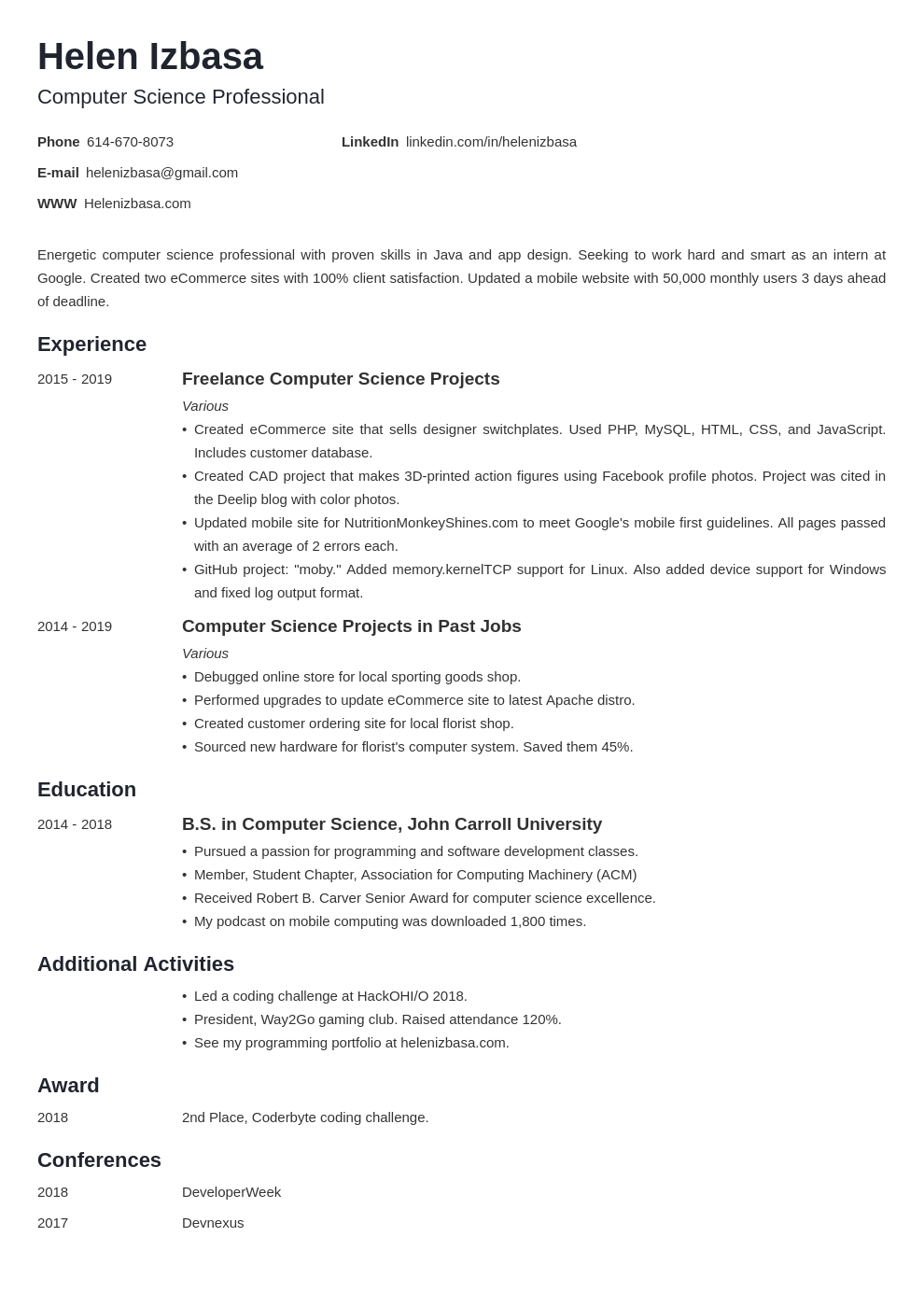
How to Put an Internship on Your Resume

If you have decided to take an internship, you will need to format your resume for it. In addition to formatting your resume for an internship, you will need to know how to add it to your resume, as well as how to remove it if you decide you don’t want to have an internship on your resume.
Formatting your resume for an internship
If you’re looking for a job with a company that requires an internship, you need to format your resume in a way that makes you stand out from the competition. Many companies use applicant tracking software (ATS) to screen applicants, so your resume needs to be as flawless as possible. Fortunately, there are a few simple ways to format your resume for an internship.
First, list your name and contact information. Include your phone number, email address, and social media handles, such as LinkedIn. You also want to include your GPA. It should be at least 3.0, on the 4.0 scale.
Next, include your internship details. Your internship can be listed on a separate line, or it can be included within the education section. In either case, you should include the dates of the internship and the location.
You should also mention any classes that you expect to finish by the time you complete your internship. For example, if you plan to finish a system architecture course, add that to your internship resume.
The skills section is another important part of your resume. This is where you can list your extracurricular activities, competitions, assistantships, and other skills. Listing these skills will let employers know exactly what you have to offer. However, you’ll need to make sure that they’re relevant to the job you’re applying for.
Ideally, you’ll need to include a list of all your internships on your resume. These should be placed under a header that lists your professional experience. Be sure to include volunteer work, summer internships, and part-time jobs.
During your internship, you’ll have an opportunity to acquire new skills. Those skills should be listed after your educational experiences, but you may still have some other accomplishments you want to highlight. Some examples of skills you can include are client relationships, public speaking, time management, mentoring, and more.
As you work your way through your internship, it’s important to focus on the results you’ve achieved. You should also list any responsibilities you have. If you’re not sure what to include, ask your intern supervisor. He or she can help you identify the most important skills you need to have for your field.
To make your resume easy to read, you should follow a telegraphic style. This means that you’ll write short sentences without using complete sentences. Use a metric and action verb, such as “began,” “made improvements,” or “improved.” You should also be sure to format your resume in a readable way. Try to make use of margins, including at least 0.5 inches on all sides.
You’ll need to spend about 45 to 55 lines on your resume. Make sure you’re spending these wisely. Avoid fonts with fancy curls, and make sure that you’re formatting your resume in a way that works with online systems.
Removing an internship from your resume
If you are looking for a job in a new field, or just trying to get out of an industry you have been in for a while, you may want to consider removing an internship from your resume. An internship can be a great way to learn about a specific career or to gain skills you can use in your current or future careers. However, once you have been an employee for a while, an internship becomes less relevant. The most important thing to remember when deciding to delete an internship from your resume is that you have to weigh the pros and cons of each option.
When you are considering whether or not to remove an internship from your resume, you will have to consider how long you have been in the industry and how much experience you have gained over the past few years. In addition, you will need to decide whether or not the internship is relevant to your future career goals. For example, if you are interested in pursuing a career in finance, you may want to consider removing your marketing internship.
Generally, you should put your best foot forward. When removing an internship, you will want to include the most pertinent details, such as the number of weeks spent there, the name of the company you interned with, and a brief description of the activities you performed during your time there. Also, make sure to list the dates. You can do this in a variety of ways, such as by month, by year, or in a chronological order. Depending on your situation, you may want to make a list of the most noteworthy activities you performed, and then replace them with the most important ones. This will help avoid any potential red flags.
It is no secret that an internship is a great way to hone your skills, but once you have gained plenty of experience and become employed, you can safely ignore an internship from your resume. Even the most well-meaning employer will not appreciate your lack of commitment, so you should take your responsibilities seriously and not leave it at that. Ultimately, you will be the one making the hiring decision, so you should be in control of your future. As such, keep these tips in mind when deciding which internship to put on your resume.
Although the most impressive feat is likely to be harder to pull off than the most impressive one, the most impressive internship is still worth mentioning on your resume. Often, an internship is listed in the same section as your other work experience. This makes it easy to include all the necessary information without having to scroll through a giant pile of old resumes to find the right ones.
Examples of internships on resumes
When you are writing an internship resume, you should highlight the most relevant aspects of the experience. You can do this by using action verbs and other words that describe the accomplishments or qualities of the internship. For example, you may want to mention your strong mathematical skills or the fact that you were a natural problem-solver.
Internships are a great way for students to gain real-life experience and make connections within their field. These experiences can also be important for those looking to change careers. By highlighting relevant experience, you can demonstrate how you have developed your skills and can apply them to your new profession.
While you do not have to include an internship on your resume, you should consider adding one or two. In addition to showing employers that you have relevant work experience, you may also demonstrate that you are a team player and willing to accept responsibility.
If you have a lot of internships, it might be beneficial to have a separate section for them. This can be a good way to show employers that you are committed to a particular field and that you have a high degree of motivation.
When listing an internship on your resume, keep in mind that it’s best to use a reverse chronological order. The order will make it easier for readers to understand what you did and how you did it.
The most basic information you should list on your resume is your name, internship title, location, and dates of employment. It’s also helpful to list the employer’s name, a description of the company, and a brief overview of your duties. Make sure to be concise and avoid overstating your accomplishments.
Another great idea is to list hobbies on your resume. Hobbies that relate to your chosen field can add personality to your resume and show that you are a fit for a specific company’s culture. Also, sports can prove useful. Playing a sport shows that you are motivated and have strong physical abilities.
You might also want to mention any special projects that you have worked on during the internship. Your supervisor can help you with this. They may be able to give you a formal title.
You should also include any awards or other achievements you may have received. These can be very useful for highlighting your accomplishments, but should only be listed if they are relevant to the position you are applying for.
Although most internships are not related to the job you’re seeking, it’s a good idea to list some of your other activities, such as volunteer work, extracurriculars, or hobbies. Doing so can demonstrate your commitment and can be a good way to show employers you have the time and energy to complete a project.