
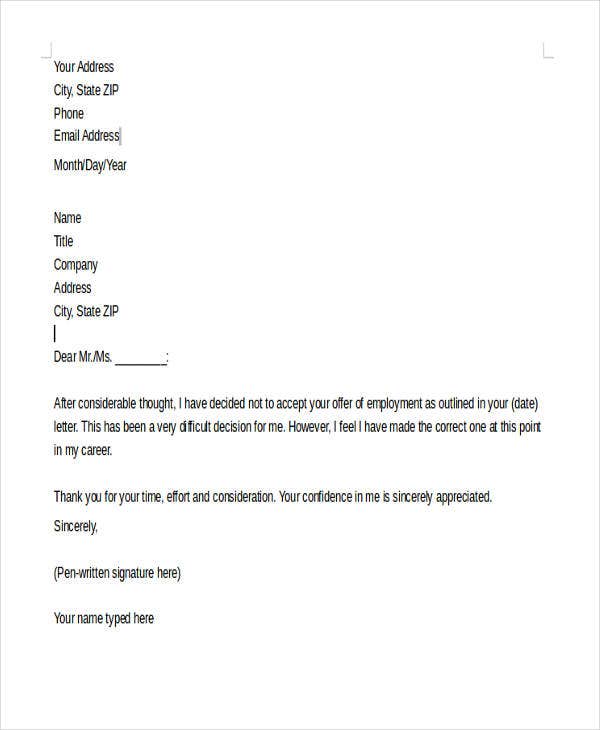
How to Decline a Job Offer Email

When you have received a job offer email from a prospective employer, you may be tempted to accept it, but you should think long and hard before you do. You should never lose your integrity by accepting a job offer, and you should always be ready to decline one.
Respond promptly
Receiving a job offer can be a big deal. Not only does it affect your happiness, but it can change your career and set you on a new course. To get the most out of your offer, you need to make sure to respond promptly.
Typically, you can expect to hear back within a week. But if you’re lucky, you may hear back sooner. That is, if you are one of the many applicants being considered by the HR manager.
Responding in a timely fashion also helps you maintain your good name as an applicant. Your response will also give you the chance to confirm important details, such as your start date and the terms of employment. In some cases, you may even need to sign a contract, if you’re applying for a job with the company.
The best way to respond to an offer is through email. However, if you don’t have access to a computer, you can opt for a phone call instead. You’ll still be representing your personal brand, so make sure you use a professional voice.
Aside from responding, you should also make sure to follow up. Most employers will have specific deadlines for their responses, so you’ll need to be prepared. And if you don’t get a call within a day or two, don’t hesitate to send a polite email.
Although your response may be short, you should still make sure to thank the hiring manager for the opportunity. It is always a good idea to include a signature line at the end of the message.
There are numerous job offer response examples to choose from. Using the proper format and writing in a formal style will help you get your point across to the HR manager. Also, it’s always a good idea to have a friend read over your response. They can edit it if need be.
Getting the most out of a job offer can be a tricky proposition. You should consider your financial and personal needs before making your decision. Additionally, it’s smart to ask for more time to consider the offer.
Mention non-negotiables
If you’re going to write a rejection email, make sure you include the appropriate information. This may mean mentioning that you are accepting the offer, or that you are not. A thank you is in order, too.
You can’t be expected to accept a job offer without mentioning the non-negotiables. In addition to your salary, you might want to mention the things you want changed, like your work schedule, or the time off you can take.
There’s a lot of competition for jobs, so you’re going to have to negotiate. To do so, you should know your strengths and weaknesses. Then, you should write a proposal to your prospective employer.
For instance, you might decide to start your new job two weeks later, since you’ll have to be in school during the busy season. By letting the company know you can’t start immediately, you’ll inspire them to reciprocate with a bit of flexibility.
One of the best ways to do that is to write a nice rejection email. Make sure it’s grammatically correct, and is free of errors. While you’re writing your email, you should be mindful of the tone you use. That way, you’ll avoid miscommunications and misunderstandings.
You’ll also want to mention the most important point of all. It’s not enough to say you’re not interested in the job. You should also say you’re not happy with the offer.
You may have to explain the reason for your decision, which isn’t always an easy task. But it’s worth it. Doing so can help you avoid a bad situation, and you can get the ball rolling on a productive negotiation.
Remember, you can’t change the company’s culture, so the best you can do is try to make your job offer a better fit. So while you’re writing your rejection email, consider some of the things you can do to deliver more value to the organization.
With some practice, you’ll find that the process is easier than you think. And it’s always a good idea to keep your cool when negotiating. Keeping an upbeat mood can go a long way in getting your points across.
Avoid procrastination
Procrastination can be a problem for many people. It’s a tendency to postpone things in order to avoid the stress and negative feelings that can come with them. This can cause major problems in your personal life and at work.
There are a number of ways to avoid procrastination. Some of the most effective strategies involve managing your time effectively.
If you have trouble completing your tasks, you should consider taking a break. Even if it’s a short break, you can rest your mind and recharge your energy. Recharging your energy will help you avoid letting a procrastination habit develop.
Managing your emotions will also help you stay on track. If you find yourself getting angry or depressed, it’s important to understand the root causes of your problems. These may be resentment or fear. When you can accurately identify your feelings, you can change them.
For instance, if you’re writing a presentation for your boss, you may be prone to stress and anxiety. However, you might be able to overcome those feelings by focusing on the positive aspects of the task. You could make it more fun and less challenging.
Rather than waiting until the last minute, you should try to finish your work as soon as possible. Getting things done will improve your mood.
Another way to avoid procrastination is to seek specialized help. Therapists can provide you with therapeutic interventions to help you develop new routines and habits. They can also help you tackle the root causes of your procrastination.
Finally, there’s the strategy of rewarding yourself. By recognizing your accomplishments, you can lighten your mood and motivate yourself to continue.
The best way to avoid procrastination, however, is to recognize your triggers and consciously avoid them. A common reason for procrastination is boredom. To prevent this from occurring, you can use a timer to limit your work time.
Although some people procrastinate on a daily basis, others suffer from broader patterns. Those who have these more pronounced patterns may need professional assistance.
One strategy that has proven to be successful is to set deadlines. Ensure that you are clear about the expected time it will take to complete a task.
Don’t burn bridges
If you want to decline an email job offer, it’s important to know how to do it in a way that doesn’t burn bridges. The last thing you want is to leave a potential employer in the dark. A good way to keep the lines of communication open and maintain a good reputation is to send a polite and respectful rejection letter.
You should never decline an offer in an angry manner. This will only hurt your relationship with the hiring manager and can hurt future opportunities with the company. Rather, you should use the opportunity to let the company know that you’re interested in future roles.
When you write your rejection, make sure to spell out the key points of the offer. Then, mention your transferable skills and overall career goals. Lastly, thank the hiring manager for their consideration.
Once you’ve written your rejection, you may want to follow up with a phone call or email. Doing so shows that you respect the hiring manager and that you want to maintain a relationship.
You should also take the time to proofread your email. An error-free and carefully-written email can communicate a lot about you and your skills. Ideally, you’ll want to read the email aloud to make sure the tone is professional and courteous.
Taking the time to properly decline an offer will be helpful in the future. After all, a declined offer could be a stepping stone into a better position at a different company. In addition, it can set the stage for a future partnership.
Declining an offer can be a tricky dance. Make sure you’re 100% certain about your decision. Keep in mind that you don’t have to disclose all of your reasons. Ultimately, it’s your right to decline.
As you decline an email job offer, follow these four simple steps to be courteous and professional. You’ll be able to stay in touch with the hiring manager and potentially find other opportunities within the company. These tips will help you to preserve a healthy working relationship with the hiring manager and prevent you from burning bridges.