
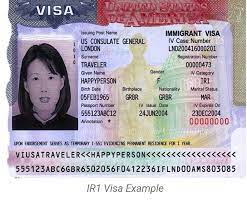

What is Immigrant Visa?
When you are seeking to immigrate to another country, you will need to know what an immigrant visa is. There are two types of immigrant visas, one that is employment-based and one that is family-based. Each of these has different requirements, so you will need to be aware of them before you begin your application.
Non-immigrant visas
If you plan on traveling to the United States, you may want to apply for a non-immigrant visa. This type of visa allows you to stay in the country for a specific period of time, usually between six months and a year. A non-immigrant visa can also be used for temporary work, study, and tourism.
There are several types of non-immigrant visas, depending on your intended purpose for coming to the U.S. For example, if you are seeking medical treatment, you would need a T-3 visa. Meanwhile, if you are a victim of trafficking in persons, you might be granted a T-1 visa. Likewise, if you want to participate in an international cultural exchange, you might be granted an O-1 visa.
Depending on your circumstances, you can choose the non-immigrant visa that is most suitable for your needs. However, it is important to consult a qualified immigration attorney if you are applying for a non-immigrant visa. You should be prepared to answer a lot of questions and spend a long time on the process.
In order to get a non-immigrant visa, you must show proof that you have ties to your home country. Usually, this means you must have family or employment ties.
Non-immigrant visas are granted to people from countries outside the United States who are visiting or studying in the U.S. These include visitors, business visas, student visas, and others. The US Department of State has a guide on how to apply for a non-immigrant visit.
Unlike immigrant visas, non-immigrant visas can be renewed multiple times, so they are good for short-term stays. However, non-immigrants can not become permanent residents of the U.S. They must return to their home country after their stay.
Immigrant visas, on the other hand, are only granted to individuals who are planning on living in the United States permanently. Most immigrant visas come from family immigration, but other avenues for immigrant status are available. As a rule, immigrant visas require family sponsorship, but some employment-based immigrant visas can be obtained by individual applicants.
Employment-based immigration visas
Employment-based immigration visas allow foreign nationals to work in the United States for a period of time. They then qualify for a green card and may also be eligible to sponsor family members for immigration. These visas are regulated by the Immigration and Nationality Act. However, the amount of immigrant visas available each year is limited. There are five categories of employment-based immigrant visas.
The first category, known as EB-1, is for workers who have “extraordinary ability” or are employed by multinational corporations. Among these workers are outstanding researchers and professors, managers, and executives. Those who are exceptional in their field are also included in the second category, EB-2.
Workers in the third category, which is known as EB-3, include professionals and other workers. These workers must have two years of training in order to qualify for a visa. Professionals and other workers must also have Labor Certification from the Department of Labor.
Immigrants in the fourth category are known as “special immigrants”. Certain religious workers, U.S. government employees overseas, and the dependents of international organization employees are among those who qualify for this type of visa.
Immigrants in the fifth category are investors in new commercial enterprises. These individuals must invest at least $500,000 in a new business that will employ at least 10 people in the United States. Investments that exceed this amount may result in permanent residence.
Employment-based immigrant visas are generally obtained through the sponsorship of a U.S. employer. The employer must complete a petition with the United States Citizenship and Immigration Services. It’s important to get legal advice before attempting to file a petition. If the applicant does not meet the requirements, the application may be denied.
Employment-based immigration visas are issued for a specified number of persons each year. Every year, the American government provides about 140,000 employment-based immigrant visas. The EB-1 and EB-2 visas constitute the majority of these visas.
Unlike other types of immigrant visas, Employment-based immigrant visas are designed to attract highly skilled labor. To qualify for a visa, an employer must prove that the worker will not adversely affect the wages of similarly employed U.S. workers.
Family-based immigration visas
Family-based immigration is an immigration process that allows people to come to the United States through family relationships. It can be quite complicated, but working with an attorney can make it go as smoothly as possible.
Immediate Relative is a category of family-based immigration. This category is available for immediate family members, including unmarried children, parents and spouses. These visas have no numerical limit and do not require a waiting period.
Family Preference is another type of family-based immigration. It involves specific, more distant family relationships. However, there are numerical limitations for each fiscal year. The waiting time can be long and can take years.
For many families, it’s not the only way to bring relatives to the United States. Other forms of family-based immigration include naturalization, which allows legal permanent residents to gain citizenship.
In order to qualify for a family-based immigration visa, you must have a sponsor. A sponsor may be an American citizen or a lawful permanent resident.
You’ll need to prove that you have a strong relationship with your sponsor. You also must show that you have sufficient income to support your family. During the application process, you’ll need to undergo security checks.
In order to sponsor a family member, you must be 21 or older. If you’re under 21, you’ll need to get an affidavit of support.
Your sponsor should have a minimum of 125 percent of the federal poverty level. Alternatively, your annual income should be 100 percent if you are a member of the Armed Forces.
When applying for a family-based immigration visa, it’s important to choose the right type. There are two main types: the immediate relative and the family preference.
The immediate relative category includes spouses and unmarried children under the age of 21. Immediate relatives do not need a visa number. After the application is approved, the immigrant can apply for a green card while in the United States.
A family-based immigration visa is often referred to as chain migration. Because of this, applicants must make sure they follow the proper protocol and provide honest information. Some simple mistakes can cause unnecessary delays, but a qualified attorney can help you avoid them.
Diversity visa
The Diversity visa is an immigrant visa that allows 50,000 people from around the world to move to the United States each year. This program was created to increase diversity among immigrants. Applicants must be from countries that have low rates of immigration.
You can apply for the diversity visa by filing Form DS-260. You can also fill out an electronic application form. In addition, you must submit a recent photo of yourself and your spouse. All children must be listed on the form, as well.
Diversity Visas are issued for up to a two-year period, and applicants must have at least two years of experience in their career field. They must also have a high school degree and be admissible under the Immigration and Nationality Act. If you are unsure whether you qualify for the diversity visa, consult a lawyer.
To obtain the visa, you must apply through the U.S. Embassy in your country of origin. Once you receive your visa, you will be invited to file an adjustment of status application if you are already in the United States.
A green card is a photo identity card that confers permanent residency in the United States. Applicants who are selected for the Diversity Immigrant Visa Program must go through consular processing before receiving their visa.
Applicants who do not meet the requirements will lose their chance at receiving a diversity visa. Applicants must have a high school education, at least two years of work experience in their field, and be admissible under the Immigration and Naturalization Act.
Diversity visa applicants must pay a $220 USCIS fee. There is a fee for both the application and the filing. Applicants are encouraged to submit their applications as early as possible. However, they must also remember that the diversity visa lottery is only open for a certain number of days each year.
The Diversity Visa Program was originally created as a way for Congress to address issues related to immigration. It opened doors to new groups of immigrants from Africa, Eastern Europe, and other parts of the world.